
Beyond Symptom Relief: How Psychodynamic Anxiety Therapy Helps
People generally use the word anxiety to refer to their feelings of excessive worry, fear, restlessness, or physical arousal. Most of my patients understand that, “rationally,” their fears are disproportionate or that there is no evidence of the catastrophe they fear, yet continue living in a state of alarm.
Anxiety may persist because it is not simply an “error” or a “distortion” in our thinking, but a meaningful response within our larger emotional life. Anxiety is created less by an external cause and more by our internal reaction to it and, in that way, it is tied to who we are and to our personal history.
Psychodynamic therapy approaches anxiety with curiosity. Rather than treating it only as something to eliminate or “fix,” it helps us understand what the anxiety is trying to protect or communicate. This does not mean that anxiety is consciously chosen, but that change can be more lasting when we understand why we seem to operate in a constant state of alarm.
Anxiety has an inner history

Anxiety is often rooted in the present and the past at the same time. A difficult meeting, a period of uncertainty, or tension with someone close can activate emotional reactions that were formed much earlier in life. Reactions that once were adaptive and may have helped us preserve a sense of connection or safety can later in life make ordinary uncertainty feel intolerable.
Often, the immediate worry is not the whole story. For example, a fear of failure may carry concerns about shame, exposure, dependence, or the loss of love.
Anxiety can also protect us against emotions that feel harder to bear directly: anger toward someone we need, grief over what has been lost, longing, envy, or a painful sense of vulnerability. Psychodynamic anxiety therapy can offer a space to recognize these feelings and what makes them so intolerable.
Making room for what anxiety conceals
There is a misconception that psychodynamic therapy is confined to analyzing the past. The reality is that it also involves developing greater capacity to experience difficult emotions without immediately converting them into worry, urgency, avoidance, or self-criticism.
As underlying feelings, conflicts, wishes, and longings become more recognizable and speakable, they are less likely to require anxiety as their messenger. The work may also address the automatic habits that keep anxiety in place: relentless self-monitoring, an unconscious demand for certainty, or the belief that vigilance prevents loss.
It is only natural that some of these emotional patterns will emerge in the work with a therapist. Some of my patients may be worried about disappointing me, hesitant to express their reactions towards me, or particularly sensitive to a moment of silence or a change in tone.
Psychodynamic anxiety therapy takes these moments not as distractions or as problems, but as feelings that have meaning. A skilled therapist will see them as opportunities to collaboratively examine, in real time, how anxiety emerges in relationship with ourselves and others.
A different relationship to uncertainty
Psychodynamic anxiety therapy does not promise a life without anxiety. Some anxiety is a natural and useful response to uncertainty, change, responsibility, and the fact that we cannot fully control the people we love or the future we imagine.
Its goal is not to replace concern with indifference, but to help people distinguish present danger from older emotional expectations. Over time, the grip of anxiety can become gentler. You can feel apprehension without assuming a catastrophic outcome, recognize familiar old fears without having them organize your whole life, and make room for wishes and conflicts that had previously been experienced only as a signal of alarm.
In this sense, psychodynamic anxiety therapy helps not only by reducing symptoms, but by making one’s inner life more intelligible, more bearable, and more available for choice.
About the Author
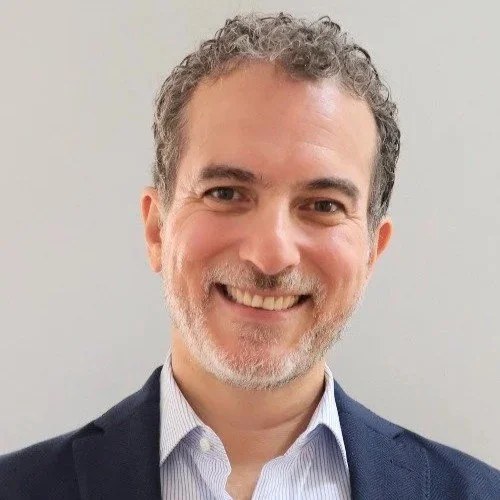
Santiago Delboy, MBA, LCSW, is a psychotherapist, clinical supervisor, and founder of Fermata Psychotherapy, a psychodynamic therapy practice in Chicago. Fermata provides therapy for adults in-person and virtually. Santiago works with people navigating the aftermath of relational trauma and attachment issues, anxiety, depression, relationship and identity, self-esteem, men’s mental health, and cultural, professional, and life transitions. His approach is informed by psychoanalytic, relational, attachment, and trauma perspectives. He is Adjunct Clinical Faculty at the Chicago Center for Psychoanalysis, and has been a clinical consultant at the Institute for Clinical Social Work and Northwestern University.
