
How Masculinity Norms Affect Men’s Mental Health
Many men grow up hearing the same messages: Stay tough. Handle problems alone. Do not cry. Be the provider. Be in control. These ideas can shape how men see themselves and how they respond to emotional pain.
Some masculinity norms can be healthy. Responsibility, resilience, loyalty, and protecting loved ones are valuable qualities. Problems start when men feel trapped by rigid expectations that leave no room for vulnerability, emotional honesty, or support from others.
The Pressure to “Keep It Together”
Many men feel pressure to appear calm and capable, no matter what is happening in their lives. Even during divorce, grief, financial stress, burnout, or depression, many continue showing up to work, caring for family, and acting like everything is fine.
People often praise men for being “strong” during hard times. What they do not always see is the emotional cost of carrying everything internally.
Men frequently describe feeling emotionally exhausted but unable to slow down. Some feel numb. Others become irritable, withdrawn, or disconnected from relationships. Many struggle with anxiety but do not recognize it because it shows up as anger, tension, overworking, or trouble sleeping instead of panic attacks.
Over time, emotional suppression can affect physical health too. Chronic stress raises the risk of high blood pressure, sleep problems, substance use, and burnout.
Avoiding Talking About Mental Health
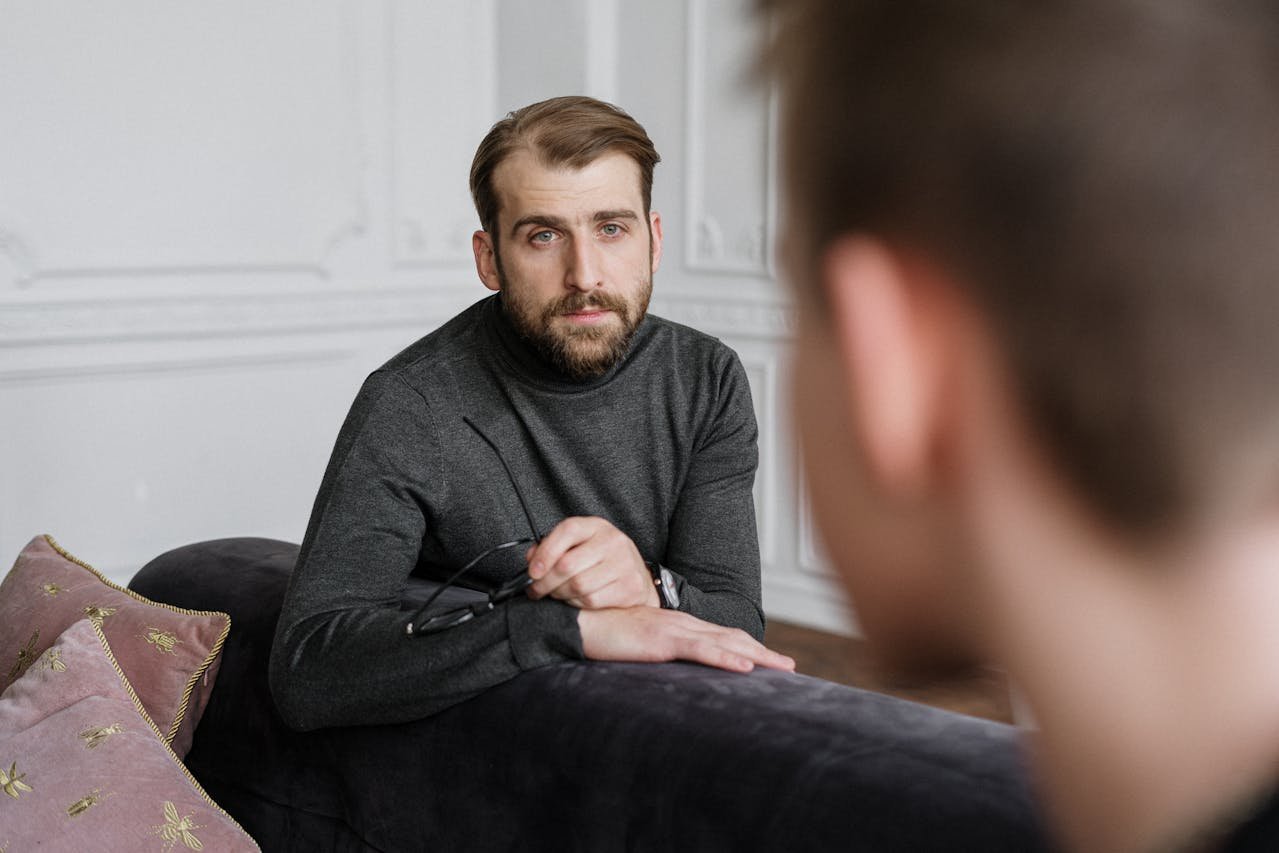
Men are often not taught how to talk about emotions in a direct way. As boys, some learned that sadness was embarrassing or that asking for help made them weak. Others grew up in homes where emotions were ignored entirely. Because of this, some men seek help only when things have already reached a breaking point.
There is also fear around judgment. Some men worry they will lose respect if they admit they are struggling. Others fear becoming a burden to their families. This creates isolation. A man may be surrounded by people and still feel completely alone emotionally.
Anger as the Only “Acceptable” Emotion
Many men grow up learning that anger is more socially acceptable than sadness, fear, or vulnerability. That can create confusion around emotions later in life.
A man dealing with anxiety may become short-tempered. A man experiencing depression may appear emotionally distant. Grief may come out as frustration instead of tears.
This does not mean men are emotionally unavailable by nature. It often means they learned to translate difficult feelings into emotions that felt safer to express. Therapy can help men identify what is happening underneath the surface reactions.
Social Media and Modern Masculinity
Social media constantly pushes messages about success, money, fitness, status, and dominance. Men are often shown unrealistic expectations about what they should achieve by a certain age.
This can create shame and self-criticism. Men may compare themselves to carefully edited versions of other people’s lives and feel like they are falling behind.
Many men quietly carry fears about failure, rejection, aging, career success, dating, fatherhood, and identity. Those fears are common, even if people rarely talk about them openly.
Healthy Masculinity
Healthy masculinity includes emotional awareness, accountability, confidence, empathy, and self-respect. It allows men to express emotion without shame, and it encourages connection instead of emotional isolation.
Strong men can ask for support and accept help when it is offered. Strong men can admit when they are overwhelmed. Mental health care does not take away masculinity. It helps men feel more grounded, emotionally aware, and connected to themselves and the people around them.
Therapy Can Help Men Feel Less Alone
Therapy often starts with conversations about stress, relationships, work pressure, anger, anxiety, or burnout. Over time, therapy can help men build coping skills, improve communication, process past experiences, and better understand their emotional patterns.
If masculinity expectations have left you feeling emotionally disconnected, overwhelmed, or isolated, men’s online counseling can help. My office provides a space to talk openly and build a strong emotional toolkit, so visit my contact page for scheduling information.
